

How to Heal Without Closure After a Breakup
How to Heal Without Closure After a Breakup. Understand the science and psychology behind this breakup experience and how to cope.
Chapter Summary
If you are trying to move on but your mind keeps returning to the same unanswered questions, you are not being dramatic. You are trying to make sense of a sudden emotional ending.
Healing without closure can feel like living with a door that never fully clicked shut, especially when you catch yourself rereading old messages at night or replaying the final conversation in the shower.
This chapter explains how to heal after a breakup without closure and without pretending you are fine. You will learn what closure actually is, why you might not get it, and what to do instead.
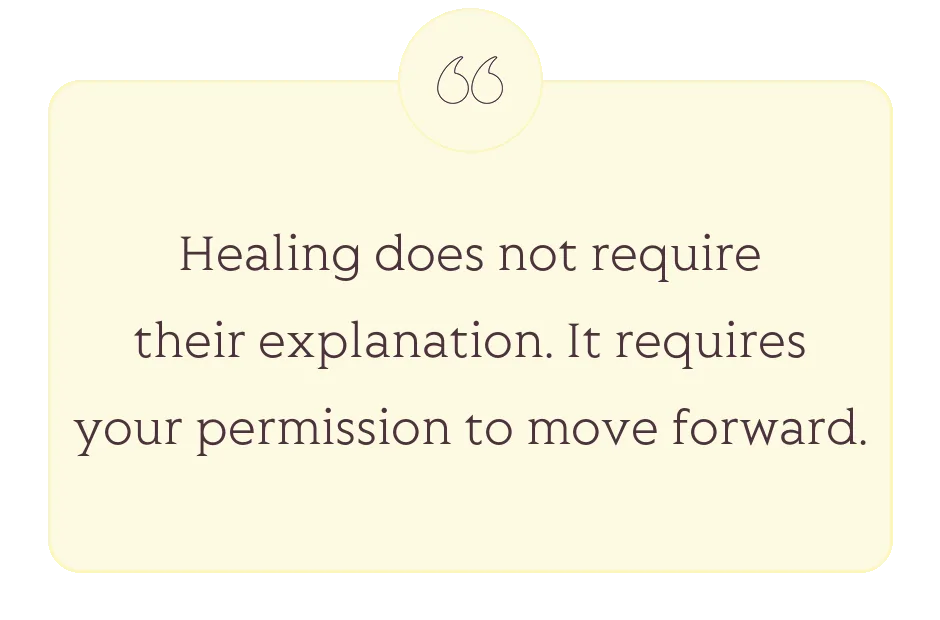
What Does It Mean To Heal Without Closure?
Healing without closure means you stop waiting for the perfect explanation and start building emotional stability from what you already know.
Closure is often imagined as a final conversation that makes everything make sense. In real life, it is usually messier. Sometimes the other person cannot explain themselves. Sometimes they do not want to. Sometimes they give you an answer that is technically words but emotionally useless.
If you are looking for closure, you are usually looking for clarity, accountability, reassurance, or a clean ending. Those are human needs. Wanting them does not make you needy. It makes you someone whose heart actually registered what happened.
Why Do Breakups Without Closure Hurt So Much?
Breakups without closure hurt because your brain treats unanswered endings like unfinished business, and your body keeps scanning for resolution.
You might also find it helpful to read: Why Closure After a Breakup Rarely Happens the Way You Expect.
When there is no clear explanation, your mind starts trying to manufacture one. It builds theories out of tiny moments. It reviews your tone, your timing, your last text. It tries to solve the breakup like it is a puzzle you can win if you think hard enough.
But heartbreak is not a logic problem. It is loss. And loss feels louder when the ending feels unclear.

Is Closure Something The Other Person Can Actually Give You?
Sometimes, but not reliably. Closure from the other person is not guaranteed, and even when you get it, it does not always calm the ache.
You might also find it helpful to read: How to Get Closure After a Breakup When You Know It Will Never Come.
A common surprise: you finally get the conversation, and it still does not land. They say something vague. They say something honest but incomplete. They say something that explains them but does not soothe you.
That is not because you are impossible to satisfy. It is because closure is not just information. It is meaning. And meaning is something you build slowly, after shock, not something you receive in a single sentence.
How To Heal Without Closure When You Still Want Answers
To heal without closure, focus on what is knowable, accept what is not, and stop using unanswered questions as a reason to keep reopening the wound.
Here is the shift that helps: instead of asking Why did they do this?, start asking What do I need in order to live inside today?
Ask yourself what is underneath the story, Was I not enough? Did I matter at all? Will I always be this replaceable? These are not curiosity questions. They are vulnerability questions. Naming them helps you soothe the actual injury, not just circle the same storyline.
What If You Keep Replaying The Breakup Conversation?
If you keep replaying the breakup conversation, your mind is trying to regain control and predict future pain, not torture you for fun.
Replaying is a common form of emotional scanning. Your brain is essentially saying: If I can understand the moment it broke, I can stop it happening again.
Try a simple boundary: give yourself a short window to think about it, then redirect your body. Stand up. Drink water. Change rooms. Small physical shifts can interrupt big emotional loops.
How Do You Stop Needing An Apology That Never Comes?
You stop needing the apology by acknowledging what the apology would represent, and giving yourself that recognition directly.
An apology is not just sorry. It is I see what I did, I understand it affected you, and You did not deserve that. When that recognition never comes, the pain can feel like it floats around with nowhere to land.
You can name reality without turning it into a war. Say quietly and clearly: What happened was not small. It makes sense that I am still impacted.
Frequently Asked Questions
How do I heal without closure after a breakup? Healing without closure starts by accepting that you may never get the explanation you want, then focusing on what you can control: your boundaries, your routines, and your self-respect. Pick a ‘good enough’ ending statement to return to when your mind spirals. You can miss them and still move forward.
Is it normal to not get closure after a breakup? Yes. Many breakups end without a clear conversation or emotional accountability. Sometimes people avoid discomfort. Sometimes they feel confused themselves. Not getting closure does not mean you were unworthy of it. It means the ending did not get handled with care.
Should I text them for closure? Only if you can handle a non-answer or a painful response. If what you need is comfort or reassurance, texting often backfires. If you do reach out, keep it to one message and one question. Do not turn it into a negotiation.
Why do I keep thinking about what they meant? Ambiguity keeps your nervous system on alert. Your mind tries to interpret mixed signals so it can protect you from future pain. Unfortunately, over-analysing usually increases emotional intensity. Gentle boundaries, grounding actions, and fewer check-and-see moments help the loop soften over time.
What if I never get an apology? You can still heal by giving yourself recognition: what happened mattered, and it makes sense that it hurt. An apology would confirm your reality, but it is not the only way to confirm it. Naming what happened clearly, with safe people, or in writing, can reduce the need for their acknowledgement.
How do I know when I have genuinely moved on? You will not wake up one day feeling nothing. Moving on is more subtle, the thoughts become less frequent, less urgent. You stop rehearsing conversations. You start making plans that do not involve them. It happens gradually, then all at once.