

Why Breakups Trigger Anxiety and Panic (Your Nervous System Explained)
Understand why breakups trigger anxiety and panic. Learn what happens in your brain and body, and how to begin healing.
Chapter Summary
Are you feeling overwhelmed, anxious, or like your body is constantly on high alert after your breakup? It’s not just in your head; your nervous system is reacting exactly as it’s designed to. When you experience heartbreak, your brain registers this loss as a significant threat, activating your body’s primal alarm system. This intense response explains why you feel so on edge, why panic can strike, and why your sense of safety has been completely shaken. Your system is screaming danger.
This chapter will demystify why your nervous system goes into overdrive after a breakup. You’ll learn how your brain interprets relationship loss as a threat and why uncertainty intensifies your anxiety. We will explore the connection between attachment and this heightened state, ultimately guiding you on practical ways to calm your nervous system and find peace amidst the storm of heartbreak.
Why Breakups Trigger Anxiety and Panic (Your Nervous System Explained)
For many people, heartbreak isn’t just emotional.
It can feel physical.
After a breakup, you might experience things like:
- racing thoughts
- a tight chest
- difficulty sleeping
- sudden waves of panic
- feeling constantly on edge
- trouble concentrating
Sometimes the anxiety can feel so intense that it becomes frightening.
You might even wonder if something is wrong with you.
But the truth is, breakups can activate powerful responses in the brain and nervous system.
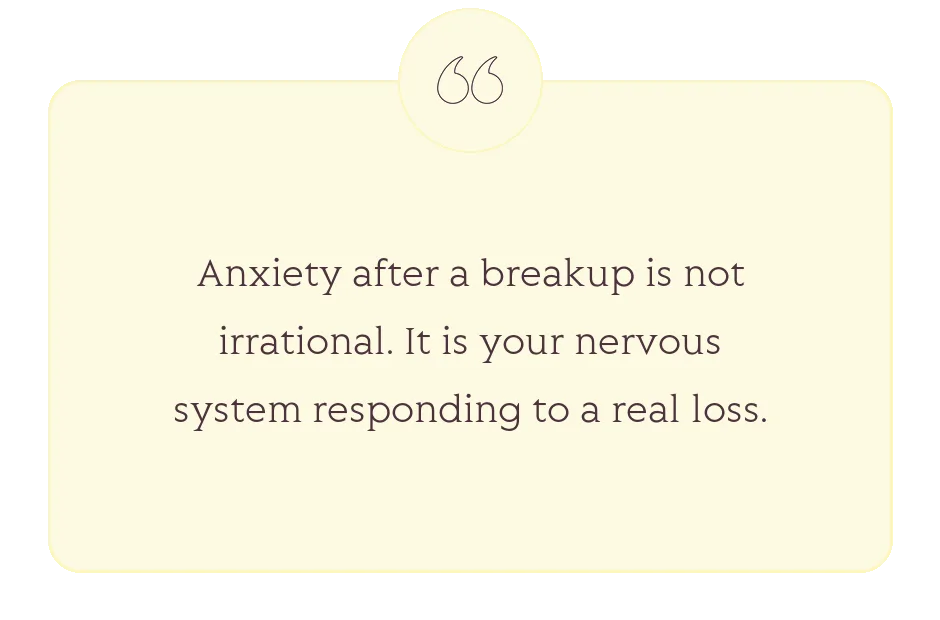
When an important relationship ends, your body is not just processing emotional loss, it is also responding to a sudden disruption in attachment and safety.
Understanding this response can make these symptoms feel less overwhelming and easier to navigate.
(And importantly: it means your reaction is not “dramatic.” It’s biological.)
The Brain Interprets Relationship Loss as a Threat
Human beings are wired for connection.
You might also find it helpful to read: Why Breakups Trigger Anxiety and Panic (Your Nervous System Explained).
From an evolutionary perspective, close relationships were historically connected to survival, protection, and emotional safety.
When a relationship becomes an important part of your life, your brain integrates that person into your emotional regulation system.
They may become someone you turn to for:
- reassurance
- comfort
- stability
- support during stress
When the relationship ends, the brain suddenly loses a key source of emotional safety.
This can trigger the brain’s threat detection system.
As a result, your body may respond with heightened alertness or anxiety.

Why Your Nervous System Feels “On Edge”
The nervous system has built-in mechanisms designed to protect you during times of stress.
You might also find it helpful to read: Why Breakup Anxiety Gets Worse at Night.
Two of the most common responses during heartbreak are:
The fight-or-flight response
When the brain detects a perceived threat, the body may activate a stress response designed to help you react quickly.
This can cause symptoms such as:
- increased heart rate
- shallow breathing
- muscle tension
- racing thoughts
Even though a breakup is emotional rather than physical danger, your nervous system may react in similar ways.
The emotional alarm system
During heartbreak, your nervous system may interpret the loss of connection as something that needs urgent attention.
This is why your mind may keep returning to the breakup or the person.
Your system is trying to solve the “problem” of lost connection.
Which is why your brain might replay conversations, memories, or unanswered questions, sometimes over and over again.
Why Anxiety Can Be Strongest in the Early Stages
In the early stages after a breakup, your brain is still adjusting to the sudden change.
During this time, you may notice:
- intrusive thoughts about the relationship
- difficulty calming your mind
- strong urges to reconnect with your ex
- fear about the future
These reactions are often strongest at the beginning because your nervous system has not yet had time to adapt.
Over time, as new routines form and emotional processing occurs, these responses often begin to soften.
Why Uncertainty Increases Anxiety
One of the biggest triggers for post-breakup anxiety is uncertainty.
Your mind may begin asking questions like:
“Did I make the right decision?”
“Will I ever feel okay again?”
“What if I never find someone else?”
“Why did this happen?”
The brain naturally prefers clear answers and predictable outcomes.
When those answers are missing, anxiety can increase as your mind attempts to regain a sense of control.
Unfortunately, breakups often involve exactly the kind of uncertainty the brain finds hardest to tolerate.
The Connection Between Attachment and Anxiety
Attachment styles can influence how strongly someone experiences anxiety after a breakup.
For example:
Anxious attachment may lead to heightened fear of abandonment and a strong urge to reconnect.
Avoidant attachment may lead someone to suppress emotions or create distance from the experience.
Regardless of attachment style, however, most people experience some level of emotional stress after a meaningful relationship ends.
Heartbreak activates systems in the brain that were designed for connection, which is why the experience can feel so intense.
How to Calm Your Nervous System After Heartbreak
While heartbreak can activate anxiety, there are ways to help your nervous system settle during the healing process.
Focus on physical regulation
Simple actions that calm the body can help reduce anxiety, such as:
- slow breathing
- gentle movement or walking
- stretching or yoga
- spending time outside
When the body settles, the mind often follows.
Create small daily routines
Structure can help your brain regain a sense of stability after emotional disruption.
Even simple habits like regular meals, sleep routines, or short walks can support your nervous system.
These small routines quietly tell your brain:
“You’re safe again.”
Reduce triggers that intensify anxiety
Limiting exposure to things that reactivate emotional distress, such as constantly checking an ex’s social media, can help your mind settle more quickly.
Sometimes healing begins with creating a little more distance from what reopens the wound.
Why Anxiety Gradually Fades
Although breakup anxiety can feel overwhelming, it usually decreases over time.
As your brain forms new emotional patterns and experiences, the relationship slowly becomes less central to your nervous system.
You may begin to notice:
- longer periods of calm
- fewer intrusive thoughts
- greater emotional stability
This shift often happens slowly.
But it is a natural part of the healing process.
(One day you may realise the anxiety isn’t the first thing you feel when you wake up anymore.)
Frequently Asked Questions
Why do breakups cause anxiety? Breakups disrupt emotional attachment and safety. The brain may interpret this loss as a threat, triggering stress and anxiety responses.
Is it normal to feel panic after a breakup? Yes. Many people experience anxiety, panic, or emotional distress after losing an important relationship.
How long does breakup anxiety last? The timeline varies, but for many people the intensity gradually decreases as the brain adapts and new routines form.
Why does my chest feel tight after a breakup? Emotional stress can activate the body’s stress response, which may create physical sensations such as muscle tension or tightness in the chest.
Can heartbreak affect mental health? Yes. Breakups can temporarily affect mood, sleep, and emotional wellbeing. Support from friends, routines, and professional help can assist recovery.