

Why Closure After a Breakup Rarely Happens the Way You Expect
Understand why closure after a breakup rarely happens the way you expect. Learn what happens in your brain and body, and how to begin healing.
Chapter Summary
You’re likely feeling a deep ache, grappling with unanswered questions after your breakup, desperately searching for that elusive ‘closure.’ It’s a universal longing, this need to understand ‘why’ and to neatly tie up loose ends. Unfortunately, the kind of resolution you envision rarely materializes from your ex. This chapter explores why that perfect, clarifying conversation often remains just a wish, leaving you feeling stuck and confused in its absence.
This chapter will dive into what we truly seek when we say ‘closure,’ why breakups inherently leave questions, and how your brain craves clear answers. You’ll learn why genuine closure often must originate from within yourself, distinguishing it from mere understanding. By the end, you will grasp why waiting for external closure can hinder your healing and discover what healthy, personal closure truly means.
Why Closure After a Breakup Rarely Happens the Way You Expect
One of the most common things people say after a breakup is:
“I just need closure.”
Closure often feels like the missing piece that will finally allow you to move forward.
You might imagine a calm conversation where everything becomes clear. Maybe you picture hearing the explanation that suddenly makes the entire relationship make sense.
But for many people, closure doesn’t arrive in the way they expect.
Sometimes the conversation never happens.
Sometimes the explanation feels incomplete.
And sometimes the answers create more confusion rather than clarity.
Understanding why closure can be so difficult after a breakup can help you approach healing in a different way.
(Because the version of closure we imagine is often very different from the way healing actually unfolds.)
What People Usually Mean When They Say “Closure”
When people talk about closure, they’re often hoping for emotional resolution.
You might also find it helpful to read: How to Heal Without Closure After a Breakup.
They may want to understand things like:
- why the relationship ended
- whether the other person ever truly loved them
- what went wrong
- whether the breakup could have been prevented
These questions are natural responses to loss.
When something meaningful ends, the brain tries to organise the experience into a story that makes sense.
Closure can feel like the final piece of that story.

Why Breakups Often Leave Unanswered Questions
Relationships are complex, and breakups rarely have a single clear explanation.
You might also find it helpful to read: How to Get Closure After a Breakup When You Know It Will Never Come.
Even when someone offers a reason, it may not fully capture the emotional dynamics that developed over time.
Some common reasons closure can feel incomplete include:
- people struggle to explain their own emotions
- both partners may have different interpretations of the relationship
- difficult conversations may be avoided
- emotions may still be raw during the breakup
Because of this, the answers people receive may not feel satisfying or final.
Sometimes the other person simply cannot provide the clarity you’re hoping for, even if they want to.
Why the Brain Wants Clear Answers
The human brain prefers certainty.
Clear explanations help the mind create a stable narrative about what happened.
When answers are missing, the brain may continue searching for meaning.
This can lead to thoughts such as:
“What did I do wrong?”
“Could I have saved the relationship?”
“Did they really care about me?”
These questions can repeat in the mind as it tries to fill in the missing pieces.
(This is why your brain may replay conversations or moments from the relationship long after it has ended.)
Why Closure Sometimes Has to Come From Within
While conversations can sometimes provide clarity, emotional closure often develops gradually from within.
As time passes, people begin to reflect on the relationship from a different perspective.
They may start to recognise patterns, needs, or incompatibilities that were difficult to see during the relationship itself.
Closure in this sense becomes less about receiving a perfect explanation and more about understanding the relationship as part of your personal story.
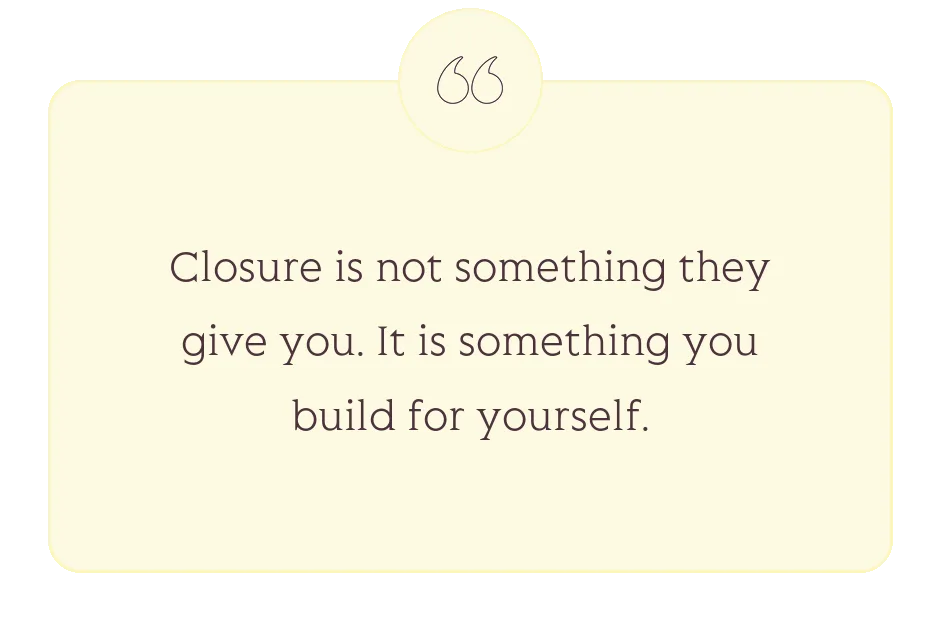
In other words, closure becomes something you grow into, rather than something someone hands to you.
The Difference Between Understanding and Acceptance
Understanding why a relationship ended can be helpful, but acceptance is often what truly allows healing to move forward.
Acceptance does not mean approving of everything that happened.
Instead, it means acknowledging that the relationship has ended and allowing yourself to move toward the next chapter of your life.
This shift can take time, and it often happens gradually rather than in a single moment.
Why Waiting for Closure Can Delay Healing
If closure is tied entirely to another person’s explanation or actions, it can keep you emotionally connected to the past.
You may find yourself waiting for:
- one more conversation
- one final apology
- a moment of recognition
But healing does not always depend on those events occurring.
In many cases, the ability to move forward begins when you allow yourself to release the expectation of a perfect ending.
What Closure Can Look Like Instead
Closure doesn’t always arrive as a dramatic conversation or final answer.
More often, it appears quietly through experiences such as:
- recognising your emotional needs more clearly
- understanding patterns within the relationship
- feeling less reactive to memories
- becoming curious about the future again
These shifts may be subtle, but they represent meaningful emotional progress.
(You may not notice the moment closure arrives, you simply realise one day that the questions feel quieter.)
Frequently Asked Questions
Why do I feel like I need closure after a breakup? After a relationship ends, the brain seeks understanding and emotional resolution. Closure can feel like the explanation that will help everything make sense.
Is it possible to move on without closure? Yes. Many people eventually move forward even without receiving the answers they initially hoped for.
Should I ask my ex for closure? Some conversations can provide clarity, but it’s helpful to consider whether the discussion is likely to bring genuine understanding or reopen emotional wounds.
Why do breakups sometimes end without explanation? People may struggle to articulate their emotions or avoid difficult conversations, which can leave unanswered questions.
How do I find closure within myself? Reflecting on the relationship, recognising your needs, and allowing time for emotional processing can gradually create a sense of personal closure.