

Why Avoidant Partners Pull Away After Breakups
Understand why avoidant partners pull away after breakups. Learn what happens in your brain and body, and how to begin healing.
Chapter Summary
It hurts deeply when someone you loved suddenly seems to vanish after a breakup, leaving you confused and wondering if they ever cared. You might be struggling to understand why your ex, especially one who always seemed a bit distant, has completely pulled away. This painful silence isn’t a reflection of your worth, but often a predictable pattern rooted in their unique way of coping with emotional intimacy and loss.
This chapter will illuminate the world of avoidant attachment, exploring why your ex distanced themselves and might appear unaffected, even when they’re not. You’ll gain insight into their emotional dynamics and the challenges they face with vulnerability. By the end, you’ll understand why emotional conversations felt difficult, helping you to move forward with clarity and self-compassion after an avoidant breakup.
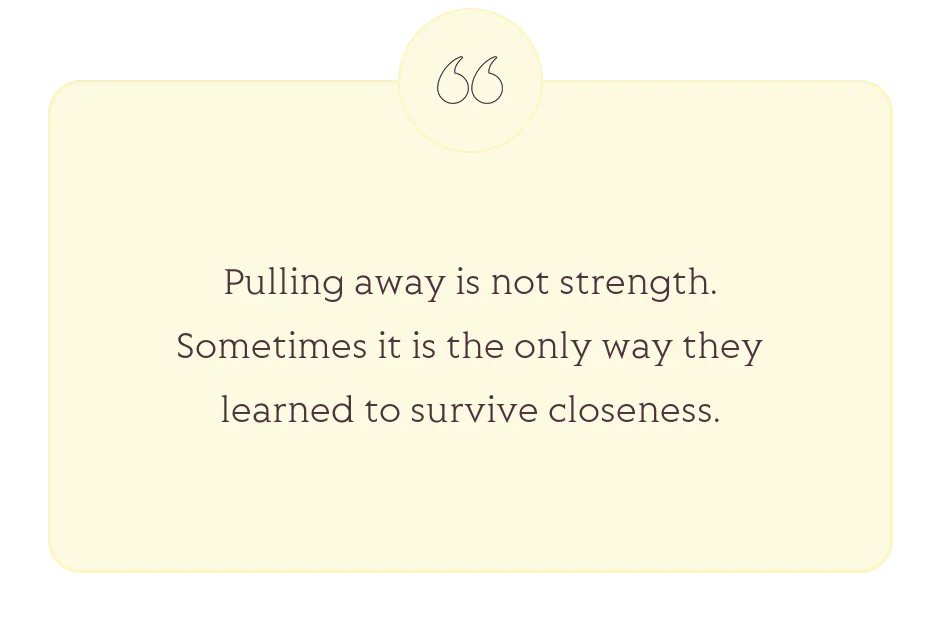
What Is Avoidant Attachment?
Avoidant attachment is one of the primary attachment styles identified in relationship psychology.
People with avoidant attachment often value independence and emotional self-reliance. While they may still form meaningful relationships, they can sometimes feel uncomfortable with intense emotional closeness.
Common characteristics of avoidant attachment may include:
-
preferring independence over emotional reliance
-
feeling overwhelmed by intense emotional conversations
-
withdrawing during relationship conflict
-
needing space to regulate emotions
These patterns often develop early in life through experiences that shape how someone responds to connection and vulnerability.
(This doesn’t mean someone with avoidant attachment doesn’t care about relationships, it simply means their nervous system may prioritise emotional independence.)
Why Avoidant Partners Distance Themselves After Breakups
When a relationship ends, people with avoidant attachment may respond differently than those with more anxious attachment patterns.
You might also find it helpful to read: Why Avoidants Disappear After Breakups (Understanding Avoidant Attachment).
Rather than openly expressing emotional distress, avoidant individuals may instinctively create emotional distance.
This can include behaviours such as:
-
limiting communication
-
avoiding emotional discussions about the breakup
-
focusing heavily on work or personal activities
-
appearing calm or unaffected
For someone observing from the outside, this can feel confusing or even hurtful.
However, these behaviours are often part of how avoidant individuals regulate emotional stress.
(In simple terms, emotional distance can sometimes be their way of managing emotional overwhelm.)

Why Avoidants May Seem Unaffected
One of the most common questions people ask after a breakup is why their avoidant ex appears to be doing fine.
You might also find it helpful to read: Do Avoidants Come Back After a Breakup? (Understanding Avoidant Attachment).
The truth is that emotional processing can look very different for different attachment styles.
People with avoidant attachment may rely on strategies such as:
-
suppressing emotional distress
-
distracting themselves with other activities
-
creating psychological distance from the relationship
These strategies can make it appear as though the breakup has not affected them.
However, emotions may still be processed privately or over a longer period of time.
(Which means the absence of visible emotion doesn’t necessarily mean the absence of emotion altogether.)
Why Emotional Conversations Can Feel Difficult
For someone with avoidant attachment, emotionally intense conversations can feel overwhelming.
Breakups often involve deep discussions about feelings, expectations, and unresolved issues.
These conversations can activate discomfort for someone who prefers emotional independence.
As a result, an avoidant partner may:
-
withdraw from discussions about the breakup
-
give short or vague responses
-
avoid revisiting emotional topics altogether
While this can be painful for the other person, it is often connected to how avoidant individuals manage emotional stress rather than a lack of care.
(In many cases, their instinct is not to argue, it’s simply to step away from the emotional intensity.)
Understanding the Emotional Dynamic
Breakups between anxious and avoidant partners can sometimes create a particularly difficult dynamic.
An anxiously attached person may seek reassurance or emotional clarity, while an avoidant partner may instinctively move away from those conversations.
This difference in emotional regulation styles can lead to feelings of frustration or confusion on both sides.
The more one person seeks closeness, the more the other may create distance.
Recognising these patterns can sometimes help people understand why the breakup unfolded the way it did.
(It can also explain why certain relationship dynamics felt like emotional push-and-pull.)
Moving Forward After an Avoidant Breakup
If your partner had avoidant attachment tendencies, it can be helpful to focus on your own healing rather than trying to interpret their behaviour.
Some helpful approaches may include:
-
allowing space for emotional processing
-
focusing on personal wellbeing and stability
-
building supportive connections with friends or trusted people
-
reflecting on what you need from future relationships
While it is natural to search for answers about a former partner’s behaviour, healing often becomes easier when attention shifts toward your own emotional recovery.
(Sometimes clarity comes not from understanding them completely, but from understanding yourself more clearly.)Other days it simply looks like not texting them. Both count.)
Frequently Asked Questions
Why do avoidant partners pull away during emotional moments? Avoidant individuals may feel overwhelmed by intense emotional situations and may create distance to regulate their feelings.
Do avoidant partners miss their ex? Avoidant individuals can still experience emotional attachment and loss. However, they may process these feelings privately or later rather than expressing them immediately.
Why does my avoidant ex seem fine after the breakup? Avoidant coping strategies often involve emotional suppression or distraction, which can make it appear as though the breakup has had little impact.
Do avoidant partners ever return after a breakup? In some cases, avoidant individuals may reconnect later once emotional intensity has decreased. However, every relationship situation is different.