

Why You Romanticise Your Ex After a Breakup (And Forget the Bad Parts)
Understand why you romanticise your ex after a breakup. Learn what happens in your brain and body, and how to begin healing.
Chapter Summary
It is completely normal to find yourself romanticizing your ex after a breakup, remembering only the good times and wondering if you made a mistake. Your brain, in its attempt to protect you and make sense of loss, often filters out the negative, leaving you with a distorted, rosier view of what once was. This chapter understands why your mind plays these tricks, creating a longing for a relationship that wasn’t always perfect.
This chapter will delve into the psychological reasons behind your brain’s selective memory, exploring how emotional contrast and the search for meaning influence your perspective. By the end, you will understand why distance changes your emotional view, why these intense memories fade, and most importantly, why romanticizing your ex does not mean that relationship was truly right for you.
Why You Romanticise Your Ex After a Breakup (And Forget the Bad Parts)
After a breakup, something confusing often happens.
Memories of the relationship start to soften.
Moments that once felt difficult may fade into the background, while the good memories suddenly feel brighter and more vivid.
You might find yourself thinking:
“Maybe it wasn’t that bad.”
“We actually had something really special.”
“What if I made a mistake?”
This experience is extremely common.
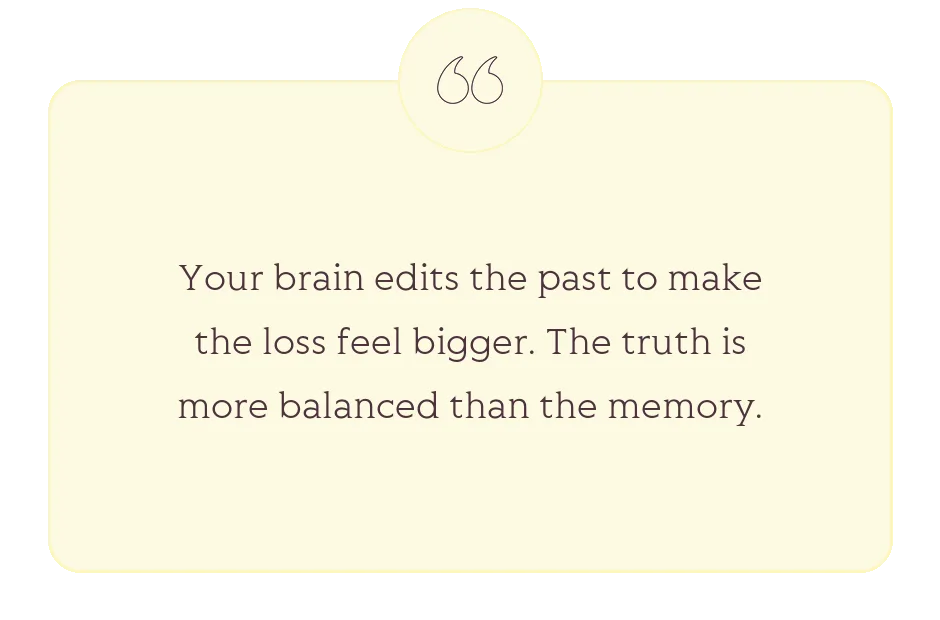
Many people notice that after a relationship ends, their mind begins highlighting the positive moments while quietly minimising the difficult ones.
(It can almost feel like your brain has edited the relationship into a highlight reel.)
Understanding why this happens can help you see these memories with more clarity.
Why the Brain Prefers Positive Memories
The brain does not store memories like a video recording.
You might also find it helpful to read: Why You Keep Replaying the Relationship in Your Head After a Breakup.
Instead, it reconstructs memories based on emotional significance.
When a relationship ends, the brain may focus more heavily on moments that represented connection, comfort, and happiness.
These memories can stand out because they were associated with feelings of emotional safety.
As a result, your mind may replay:
- the early stages of the relationship
- affectionate moments
- meaningful conversations
- shared experiences
While the difficult moments may feel less present.

The Emotional Contrast Effect
After a breakup, there is often a sharp contrast between past connection and present absence.
You might also find it helpful to read: Why You Keep Thinking About Your Ex (Even When You Don’t Want To).
When something meaningful disappears, the brain may amplify memories of the good moments because they represent what has been lost.
This contrast can make past experiences feel even more powerful than they did at the time.
For example, an ordinary memory, such as cooking dinner together or laughing about something small, can suddenly feel deeply significant.
(Things that once felt normal can suddenly feel almost nostalgic.)
Why Your Mind Searches for Meaning
Breakups often leave unanswered questions.
Your brain may revisit the relationship in an attempt to understand:
- what went wrong
- whether it could have been saved
- what the relationship meant
When searching for answers, your mind may highlight the moments that felt meaningful or hopeful.
This can unintentionally create the feeling that the relationship was more perfect than it actually was.
Your brain is not trying to mislead you, it is simply trying to make sense of loss.
Why Distance Changes Emotional Perspective
Time and distance often soften emotional experiences.
Events that once felt stressful or frustrating may begin to lose their intensity.
This doesn’t mean those difficulties never existed, it simply means your emotional distance from them has grown.
Because of this, memories can begin to feel filtered.
You may remember how the relationship felt during its best moments rather than how it felt during its most challenging periods.
(This is why people sometimes miss the feeling of the relationship more than the reality of it.)
Why This Doesn’t Mean the Relationship Was Right for You
Romanticising an ex does not necessarily mean the relationship should continue.
It simply reflects how the brain processes emotional loss.
You can appreciate the meaningful moments that existed while still recognising that the relationship may not have been healthy, balanced, or sustainable.
Both things can be true at the same time.
A relationship can matter deeply and still not be the right place for you to stay.
How to See the Relationship More Clearly
If you find yourself idealising your ex, it can help to gently broaden your perspective.
You might ask yourself:
- What challenges existed in the relationship?
- How did I feel during difficult moments?
- Were my emotional needs consistently met?
- What did the relationship teach me about myself?
Reflecting on the full picture, rather than only the highlights, can help bring your memories back into balance.
Why the Intensity of These Memories Fades
In the early stages of heartbreak, the brain often revisits emotional memories frequently.
But as time passes and new experiences fill your life, those memories usually become less dominant.
The relationship becomes one chapter of your life rather than the central story.
When that shift happens, memories tend to settle into a more realistic and balanced perspective.
(You may still remember the good moments, they just won’t carry the same emotional pull.)
Frequently Asked Questions
Why do I suddenly miss my ex after a breakup? When a relationship ends, the brain may focus on positive memories associated with connection and emotional safety.
Why do I forget the bad parts of the relationship? Emotional distance and memory reconstruction can soften difficult experiences while highlighting meaningful moments.
Is it normal to romanticise your ex? Yes. Many people experience this after a breakup as the brain processes loss and searches for meaning.
Does romanticising my ex mean I should get back together? Not necessarily. Romanticising someone often reflects emotional memory rather than the full reality of the relationship.
How can I stop idealising my ex? Reflecting on the entire relationship, including the challenges and unmet needs, can help restore a more balanced perspective.