

Why Your Ex Moving On Quickly Hurts So Much (Even If You Expected the Breakup)
Understand why your ex moving on quickly hurts so much. Learn what happens in your brain and body, and how to begin healing.
Chapter Summary
It feels like a punch to the gut when your ex moves on quickly, doesn’t it? Even if you saw the breakup coming, seeing them with someone new can trigger a wave of unexpected pain and confusion. You might wonder if your relationship ever mattered, or if you were easily replaceable. This isn’t just about losing them; it’s about the deep-seated fears and insecurities that surface when your heart interprets their swift departure as a personal rejection, making your healing journey feel even more complex.
This chapter dives into why your brain interprets your ex moving on as rejection, how comparison intensifies your pain, and the unique challenges social media presents. We will explore why their quick rebound doesn’t necessarily mean they are fully healed, and how this situation can trigger deeper emotional wounds. By the end, you will understand these complex feelings better, paving the way for a healthier shift in your perspective and beginning your true healing process.
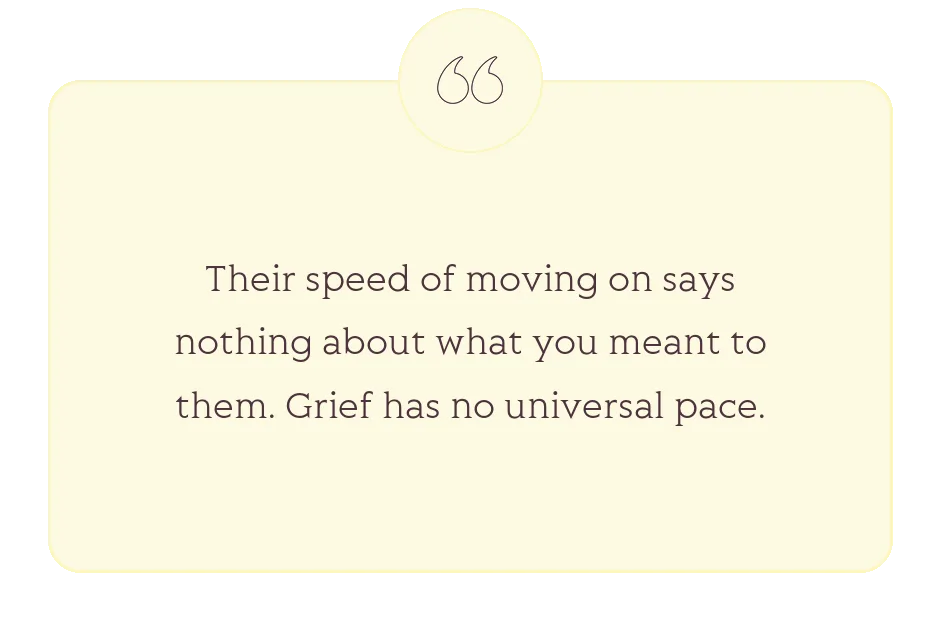
Why Your Ex Moving On Quickly Hurts So Much (Even If You Expected the Breakup)
Few experiences after a breakup feel as painful as seeing your ex move on quickly.
Maybe you saw a photo on social media. Maybe a mutual friend mentioned they were dating someone new. Or maybe you heard that they seem happy and unaffected.
In that moment, it can feel like the ground drops out from under you.
You might find yourself thinking:
“Did I mean nothing to them?”
“How are they already okay?”
“Was the relationship even real?”
Even if you were the one who initiated the breakup, seeing an ex move on quickly can still hurt deeply.
(It can feel like your brain is suddenly trying to rewrite the entire history of the relationship.)
Understanding why this reaction happens can help you navigate the emotions without turning the pain against yourself.
Why the Brain Interprets It as Rejection
When you see an ex move on quickly, your brain often interprets it as a form of rejection.
You might also find it helpful to read: When Your Ex Moves On Before You: Why It Hurts and How to Cope.
Even if the breakup itself had already happened, this new information can feel like confirmation that the relationship has truly ended.
Your mind may create painful interpretations such as:
- “They never cared as much as I did.”
- “They replaced me easily.”
- “I wasn’t important.”
These thoughts can trigger strong emotional responses because they challenge your sense of worth and belonging.
Our brains are wired to look for meaning when relationships end, especially when the ending feels sudden or confusing.

Why Comparison Intensifies the Pain
Another reason this experience feels so difficult is comparison.
You might also find it helpful to read: Why You Romanticise Your Ex After a Breakup (And Forget the Bad Parts).
Your mind may begin measuring your healing against your ex’s apparent progress.
You might wonder:
“Why am I still struggling?”
“Why are they fine already?”
“What do they have that I didn’t?”
The problem is that comparison rarely reflects reality.
People process breakups differently, and outward appearances rarely reveal what someone is actually feeling internally.
(Some people cry privately. Others distract themselves immediately. Both can look very different from the outside.)
Why Social Media Makes This Even Harder
In many cases, people learn that their ex has moved on through social media.
But social media often shows carefully curated moments, not real emotional experiences.
Photos, captions, and posts can create the impression that someone is completely happy and thriving, even when the reality may be more complicated.
Because of this, your brain may be reacting to a highlight reel rather than the full story.
And unfortunately, highlight reels can be very convincing.
Why Moving On Quickly Doesn’t Always Mean They’re Fully Healed
Sometimes people enter new relationships quickly because they are trying to avoid the discomfort of being alone.
This is often referred to as a rebound relationship.
Rebounds can happen for many reasons, including:
- distraction from emotional pain
- loneliness
- seeking validation
- difficulty sitting with loss
While some rebound relationships eventually become meaningful, others simply delay the emotional processing that comes with a breakup.
This means that someone appearing to move on quickly does not necessarily mean they have fully processed the relationship.
Why This Experience Can Trigger Deeper Emotional Wounds
Seeing an ex move on quickly can sometimes activate deeper emotional fears.
For example, it may touch on beliefs such as:
- fear of being replaced
- fear of not being enough
- fear of abandonment
When these deeper fears are triggered, the emotional reaction can feel stronger than expected.
Recognising this can help you respond with self-compassion rather than self-criticism.
(Your reaction is not dramatic, it’s human.)
The Shift That Helps Healing Begin
One of the most powerful shifts after a breakup is redirecting your focus away from what your ex is doing.
This doesn’t mean ignoring your feelings or pretending the pain isn’t there.
It means gently returning your attention to questions such as:
- What do I need right now?
- What kind of relationships feel safe and supportive for me?
- What would help my nervous system settle today?
Your healing doesn’t depend on how quickly someone else moves forward.
It depends on how you care for yourself during this transition.
Frequently Asked Questions
Why does it hurt when my ex moves on quickly? Seeing an ex move on can trigger feelings of rejection, comparison, and loss, especially if the relationship was emotionally meaningful.
Does moving on quickly mean they never loved me? Not necessarily. People cope with breakups in many different ways, and outward behaviour does not always reflect deeper emotions.
What is a rebound relationship? A rebound relationship is when someone begins dating shortly after a breakup, often as a way to distract from emotional pain or loneliness.
Why am I still hurting while they seem fine? People heal at different speeds. Some individuals may appear calm externally while processing emotions privately.
Will the pain of seeing them move on fade? For most people, the intensity of this experience gradually decreases as emotional distance from the relationship grows.