

Why Breakups Feel Like Withdrawal (The Science of Heartbreak)
Understand why breakups feel like withdrawal. Learn what happens in your brain and body, and how to begin healing.
Chapter Summary
If you have ever felt like a breakup left your brain in a strange kind of chaos, there is a biological reason for it. Romantic relationships activate deep reward and attachment systems in the brain. When a relationship ends, your brain can respond in ways that feel remarkably like withdrawal. This post explains what is happening inside your brain after a breakup, and why your reactions are not dramatic. They are neurological.
Why Your Brain Struggles After a Breakup
When you love someone, your nervous system quietly starts treating them like part of your own stability. Their voice, their presence, even just knowing they exist somewhere in your day becomes wrapped up in how you feel calm.
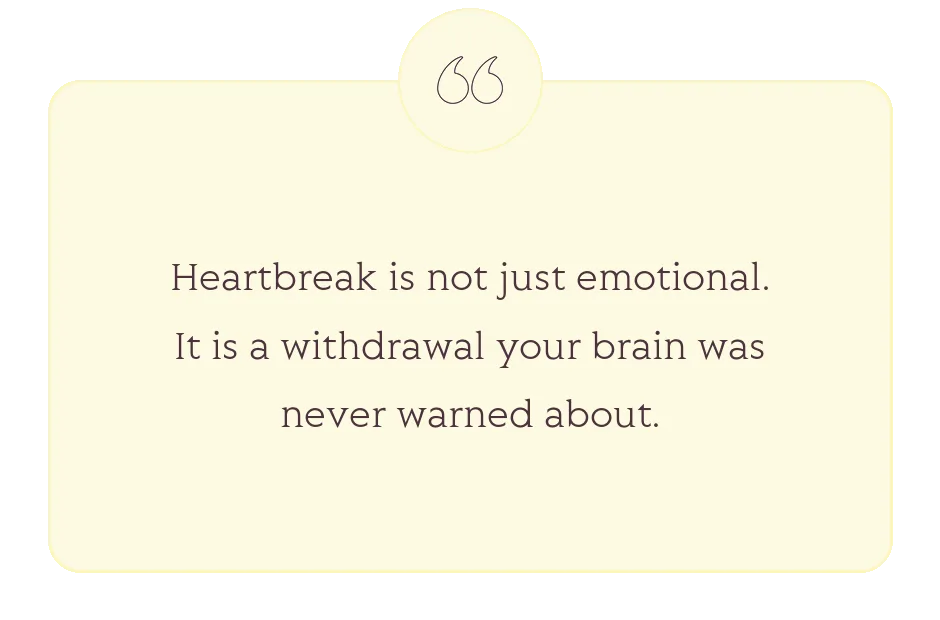
Here is the one fact worth keeping close: the steadiness a partner gave your nervous system does not fade out gently when a relationship ends. It switches off overnight. Your body does not fully know the difference between losing a person and losing a habit it had come to rely on, which is why a breakup can create something that genuinely resembles withdrawal.
So if you are still feeling pulled toward someone even though your brain has fully clocked that it is over, that is not weakness and it is not you being dramatic. It is chemistry taking a little longer than logic to catch up. Understanding this is the first step in healing from heartbreak without judging yourself for the cravings.
Why You Cannot Stop Thinking About Your Ex
After a breakup, many people find themselves thinking about their ex constantly.
You might replay conversations, analyse small moments, or suddenly remember something they said in passing eight months ago that meant nothing then and everything now. Congratulations, you have become a forensic investigator of your own relationship.
This is not you being obsessive. It is your mind trying to make sense of losing something that used to make you feel secure, so it keeps circling back looking for an explanation. You might find yourself cycling through the same questions:
“Why did this happen?” “Could I fix things?” “Do they miss me?”
Those questions will not hand you peace no matter how many times you ask them, but wanting to ask them is completely normal. It is also one reason why the urge to text your ex is strongest at night, when there is nothing else around to distract you from missing them.

Why Breakups Can Feel Physically Painful
Heartbreak is not only felt in your emotions, it shows up in your body too, and there is a reason for that: emotional rejection and physical pain register in strikingly similar ways in the brain, which is part of why a breakup can genuinely ache.
That helps explain why heartbreak can feel physically heavy or uncomfortable. People often report symptoms such as:
-
tightness in the chest
-
difficulty sleeping
-
fatigue
-
loss of appetite
This is also why breakups mess with your sleep, appetite, and general sense of stability. Your body is not being dramatic. It is just catching up with what your heart already knows.

Why the Urge to Reach Out Feels So Strong
One of the most common experiences after a breakup is the overwhelming urge to contact an ex.
Even when someone logically knows that reconnecting may not be helpful, the emotional impulse can still feel powerful. This happens because the brain is seeking relief from the discomfort of separation. Reaching out may feel like it could restore the emotional connection that once regulated the nervous system.
(It is essentially your brain remembering the fastest route it used to take to feel better.)
If you are weighing whether to reach out, this guide on whether to text your ex walks through when it helps and when it hurts your healing.
Why Healing Takes Time
The brain does not instantly adjust to the loss of a relationship.
Just as habits take time to change, emotional bonds take time for the nervous system to reorganise. Gradually, new routines, experiences, and connections help the brain build new pathways. During this period, it is common for emotions to come in waves.
Some days may feel easier, while others may feel unexpectedly heavy. This does not mean you are going backwards. It usually means your brain is still processing the change. Over time, these waves typically become less intense as your emotional system adapts.
Supporting Yourself Through Breakup Withdrawal
Although the experience can feel overwhelming, there are ways to support your nervous system as it adapts.
Some people find it helpful to:
-
limit checking an ex’s social media
-
focus on small daily routines
-
talk openly with trusted friends
-
write down thoughts rather than acting on impulses
These practices can help create stability while your brain gradually adjusts to the change. Most importantly, reminding yourself that what you are experiencing is a biological response to emotional loss can reduce the feeling that something is wrong with you.
(Your brain is not broken. It is simply recalibrating.)
Frequently Asked Questions
Why Do Breakups Feel Like Withdrawal? A relationship becomes part of how your nervous system finds comfort and stability. When it ends, your brain loses access to that familiar source of comfort, which can create feelings similar to withdrawal.
Why Can’t I Stop Thinking About My Ex? Constant thoughts about an ex are common because your mind is trying to process the loss of a connection that used to make you feel secure. It is not a flaw, it is just your brain doing its job a little too well.
Why Does No Contact Feel So Painful? No contact removes the emotional reinforcement your brain was used to receiving from that person, which can temporarily intensify the withdrawal-like feelings before they begin to ease.
How Long Does Breakup Withdrawal Last? There is no universal timeline. Emotional recovery happens gradually as the brain forms new routines and emotional patterns. Being gentle with yourself through that process matters more than hitting a timeline.
Is It Normal to Feel Physically Unwell After a Breakup? Yes. Emotional pain can activate the body’s stress response and create physical symptoms such as fatigue, chest tightness, disrupted sleep, and loss of appetite. These are real and valid responses.