

How Long It Really Takes to Get Over a Breakup (And Why It’s Different for Everyone)
Understand how long it really takes to get over a breakup. Learn what happens in your brain and body, and how to begin healing.
Chapter Summary
Right now, you’re likely wondering when the pain will finally subside and if you’ll ever feel like yourself again. This overwhelming question is universal during heartbreak. It’s a profound grief that impacts your entire being because your brain and heart are literally adjusting to a world without someone who was once central to your life. This process isn’t linear, and your unique journey is valid.
This chapter dives deep into understanding why healing isn’t a race and why your personal timeline is unique. We’ll explore how your brain adjusts, the wavy nature of emotional recovery, and the unseen progress you’re making. By the end, you’ll grasp why comparing your journey is unhelpful and discover what truly aids your healing process, helping you recognize when lightness begins to emerge.
How Long It Really Takes to Get Over a Breakup (And Why It’s Different for Everyone)
One of the first questions people ask after a breakup is:
“How long will it take to feel okay again?”
When heartbreak feels intense, it’s natural to want reassurance that the pain won’t last forever. You may find yourself searching for timelines or comparing your healing to other people’s experiences.
You might wonder:
“Why am I still thinking about them?”
“Shouldn’t I be over this by now?”
“Why does it still hurt?”
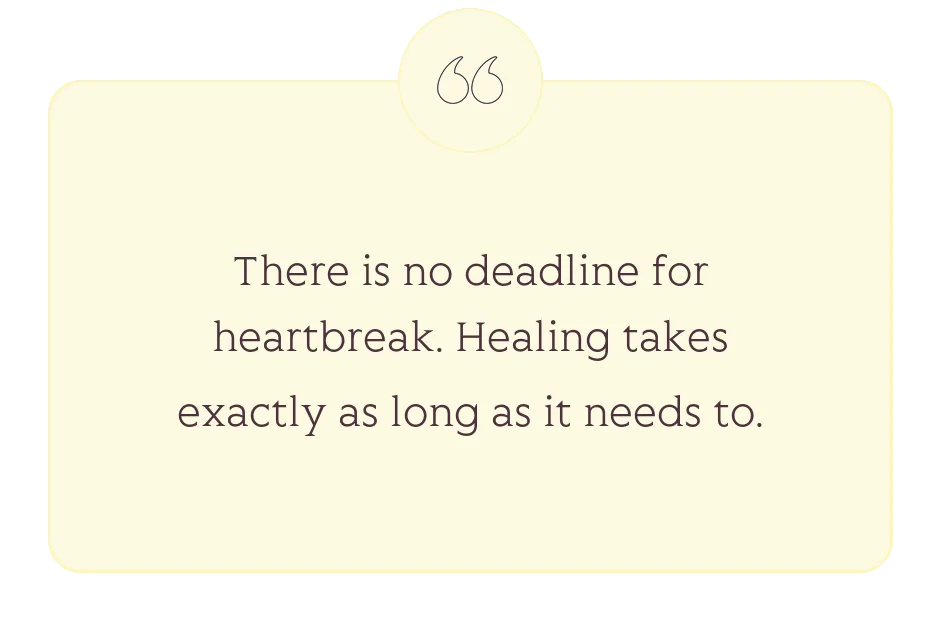
But the truth is, there isn’t a universal timeline for getting over a breakup.
Some people start to feel better after a few months, while others take longer to process the emotional impact of the relationship. The stages of breakup recovery rarely follow a tidy schedule, and that’s normal.
And neither timeline is “wrong.”
Understanding why healing timelines vary can help you approach the process with more patience and compassion toward yourself.
Why Breakups Affect People Differently
Every relationship is unique, and the emotional impact of a breakup often depends on several factors.
You might also find it helpful to read: How to Heal After a Breakup: A Complete Guide to Moving Forward.
These may include:
- how long the relationship lasted
- the depth of emotional attachment
- whether the breakup was mutual or unexpected
- how the relationship ended
- your personal support system
For example, the end of a long-term relationship that involved shared routines and future plans may take longer to process than a shorter connection.
This doesn’t mean one breakup is more valid than another, it simply reflects how deeply the relationship was integrated into your life.

The Brain Needs Time to Adjust
When a relationship becomes part of your daily life, your brain adapts to the presence of that person.
You might also find it helpful to read: Healing from Heartache: A Roadmap to Recovery with The Breakup Bible.
They may become connected to many parts of your routine, including:
- morning or evening conversations
- shared activities
- emotional support during stressful moments
- plans for the future
When the relationship ends, your brain must gradually adjust to life without those patterns.
This adjustment takes time as new routines and emotional associations begin to form.
(It’s a little like your brain learning a new map after the old one suddenly disappears.)
Why Emotional Healing Often Happens in Waves
Many people expect healing to follow a steady upward path.
But in reality, emotional recovery often happens in cycles.
You may experience periods where you feel stronger, followed by moments when memories or emotions return.
These waves are part of how the brain processes emotional experiences.
Over time, the waves usually become less intense and less frequent as your mind adapts to the change.
Feeling emotional again does not mean you’re going backwards.
It often simply means your brain is still processing.
The Hidden Progress of Healing
Even when it doesn’t feel like you’re moving forward, healing may still be happening beneath the surface.
You might notice small changes such as:
- thinking about your ex slightly less often
- feeling more comfortable spending time alone
- finding moments of enjoyment in daily life
- feeling curious about new possibilities
These shifts can be subtle, but they are signs that your emotional world is expanding again.
Sometimes progress appears quietly, one small moment at a time.
Why Comparing Your Healing to Others Isn’t Helpful
After a breakup, it can be tempting to measure your progress against other people.
You may wonder why a friend seemed to recover quickly, or why your ex appears to have moved on already.
But healing is deeply personal.
People have different emotional processing styles, support systems, and attachment patterns.
Comparing timelines can create unnecessary pressure during a process that naturally unfolds at its own pace.
Your healing is not a race.
It’s an adjustment.
What Actually Helps Healing After a Breakup
Although time plays an important role in emotional recovery, certain things can support the healing process.
Supportive relationships
Talking with trusted friends or family members can provide emotional comfort and perspective.
Creating new routines
Establishing new habits helps the brain adjust to life without the relationship.
Self-reflection
Understanding what you learned from the relationship can help you move forward with greater clarity.
Emotional patience
Allowing yourself to feel emotions without rushing the process can reduce internal pressure.
Healing often happens more gently when you stop trying to force it.
When Healing Begins to Feel Lighter
Many people eventually notice a quiet turning point.
One day you may realise that you went several hours without thinking about the relationship.
Later, you may notice that memories no longer carry the same emotional weight.
These moments are often signs that the relationship has begun to settle into the past.
Healing rarely arrives as a sudden transformation.
More often, it appears gradually through these small shifts.
Frequently Asked Questions
How long does it take to get over a breakup? There is no universal timeline. Healing can take weeks, months, or longer depending on the relationship and the individual.
Why does it take so long to get over someone? Romantic relationships create strong emotional and neurological patterns, which take time for the brain to adjust after the connection ends.
Is it normal to still miss someone months after a breakup? Yes. Missing someone after a meaningful relationship is a natural part of the emotional adjustment process.
Why do I feel like I should be over it by now? Social expectations or comparisons with others can create pressure, but healing often unfolds differently for each person.
What helps you get over a breakup faster? Supportive relationships, new routines, emotional reflection, and self-compassion can all support the healing process.