

Why You Want to Text Your Ex Late at Night (And Why the Urge Feels So Strong)
Understand why you want to text your ex late at night. Learn what happens in your brain and body, and how to begin healing.
Chapter Summary
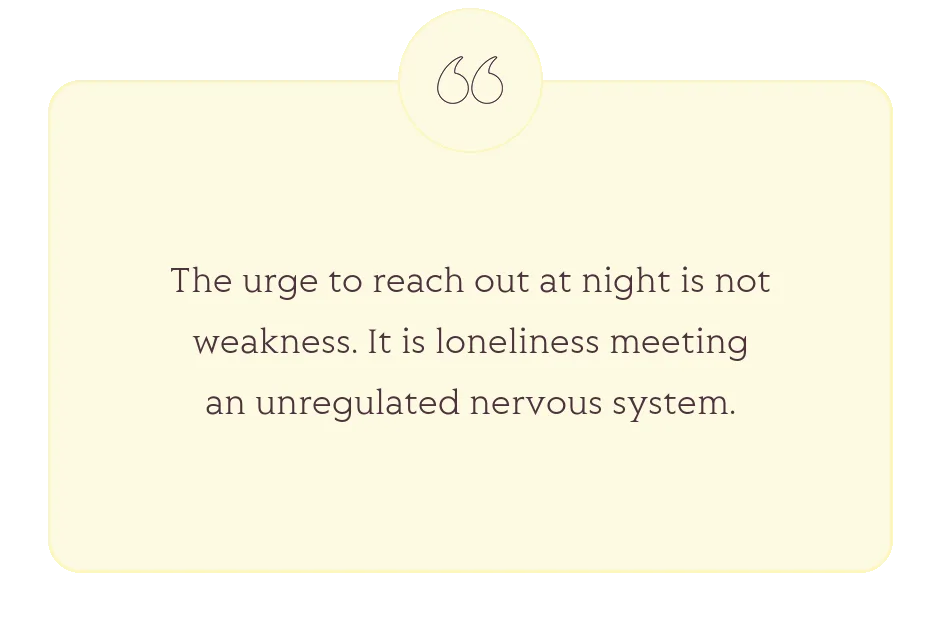
You’re lying awake, the silence amplifying the ache in your chest, and suddenly the urge to text your ex feels overwhelming. It’s a common, painful experience, especially when the world goes quiet at night. This isn’t just weakness; it’s your brain seeking comfort from a familiar source, amplified by loneliness and the emotional habits formed during your relationship. It feels incredibly strong because your mind wants immediate relief from the discomfort of heartbreak, making those late-night hours particularly challenging.
This chapter will dive deep into why nights feel harder after a breakup, exploring the role of loneliness, emotional habits, and your brain’s desire for instant relief. We’ll also uncover how factors like fatigue and alcohol can intensify these urges. By the end, you’ll understand the powerful mechanisms at play, and learn why missing someone doesn’t always mean reaching out, empowering you to navigate these difficult moments with greater self-awareness.
Why You Want to Text Your Ex Late at Night (And Why the Urge Feels So Strong)
Many people notice something strange after a breakup.
During the day, you may feel relatively stable. You go to work, talk to friends, run errands, and keep yourself busy.
But when night arrives, something shifts.
Suddenly the urge appears:
- to text them
- to check their social media
- to reread old messages
- to say something, anything, just to feel connected again
You might even pick up your phone and start typing before stopping yourself.
(Or type the entire message… and stare at the send button like it might explode.)
If this happens to you, you’re far from alone. The late-night urge to contact an ex is one of the most common experiences people report after a breakup.
Understanding why nighttime intensifies these feelings can help you respond to the urge with more awareness, and a little less self-judgment.
Why Nights Feel Harder After a Breakup
During the day, your brain has something important that helps regulate emotions: distraction.
You might also find it helpful to read: Why You Want to Text Your Ex at Night (And Why the Urge Feels So Strong).
Work tasks, conversations, routines, and movement keep your attention directed outward.
But at night, many of those distractions disappear.
The environment becomes quieter. Your mind has more space to wander.
When the mind finally slows down, unresolved emotions often surface.
That’s why thoughts about your ex may suddenly feel louder once the day ends.
(It’s not that the feelings appeared out of nowhere, it’s that your brain finally has the space to notice them.)

The Role of Loneliness and Emotional Habit
Relationships often create emotional habits.
You might also find it helpful to read: Why You Want to Text Your Ex at Night.
Maybe you used to text each other goodnight. Maybe evenings were when you talked about your day or shared small details of life.
After a breakup, those habits don’t disappear overnight.
Your brain may still expect that moment of connection.
So when nighttime arrives and the usual interaction isn’t there, the absence becomes noticeable.
The urge to text them is sometimes less about the specific message, and more about the missing routine of connection.
(In other words, your brain is still expecting the person who used to be there.)
Why Your Brain Wants Immediate Relief
When emotional discomfort rises, the brain naturally looks for ways to reduce it.
Texting an ex can feel like it would instantly ease the discomfort.
Even imagining them responding can create a brief sense of relief.
But that relief is often temporary.
If the response doesn’t come, or if the conversation doesn’t go the way you hoped, the emotional distress can actually increase.
This is why many people wake up the next morning wishing they hadn’t sent the message.
(Nighttime emotions can feel incredibly convincing, morning clarity sometimes tells a different story.)
Why Alcohol and Fatigue Make the Urge Stronger
Evenings often come with factors that lower emotional resilience.
These can include:
- fatigue from the day
- reduced willpower
- alcohol or social environments
- being physically alone
When your emotional capacity is lower, impulses can feel stronger.
This doesn’t mean the urge is permanent.
It simply means your nervous system has fewer buffers in that moment.
The Pause That Changes Everything
One of the most helpful strategies when the urge to text your ex appears is creating a pause.
Instead of acting immediately, give yourself a short window before making the decision.
For example:
- wait 20 minutes
- write the message in your notes app instead
- take a short walk or drink water
- message a friend instead
Often, once the emotional surge settles, the urge fades.
The goal isn’t to suppress your feelings, it’s to allow the emotional wave to pass before making a decision you may regret.
(Sometimes the kindest thing you can do for yourself is simply not press send tonight.)
Why Missing Someone Doesn’t Mean You Should Contact Them
It’s important to remember that missing someone is a normal human response to loss.
It doesn’t necessarily mean reaching out will bring the comfort you’re hoping for.
You can miss someone and still recognise that contact might reopen emotional wounds.
Sometimes the most compassionate choice is allowing yourself to miss them without reopening the connection.
With time, the emotional intensity of those nighttime urges usually softens.
Frequently Asked Questions
Why do I miss my ex more at night? Evenings often bring fewer distractions and more quiet reflection, which allows unresolved emotions and memories to surface more easily.
Is it a bad idea to text your ex after a breakup? It depends on the situation and your intentions. However, many people find that reaching out impulsively can reopen emotional wounds rather than bring closure.
Why do I feel the urge to text my ex suddenly? Strong emotions, memories, loneliness, or familiar routines can trigger the impulse to reconnect.
Should I text my ex if I still love them? Before reaching out, it can help to consider what outcome you are hoping for and whether the conversation will support your healing.
How do I stop myself from texting my ex? Creating small pauses before acting, removing easy contact triggers, and reaching out to supportive friends instead can help reduce impulsive messaging.