

Grieving a Relationship After a Breakup: What It Means and How to Heal
Chapter Summary
When a relationship ends, you are not only losing a person. You are also letting go of a life you imagined, a rhythm you grew used to, and a version of yourself that existed inside that love.
Even when the breakup was the right decision, grief can still arrive quietly and unexpectedly. You might feel steady one moment, then undone the next by a memory, a song, or a familiar place. This doesn’t mean you are weak. It means something meaningful has ended.
Grieving a relationship is deeply personal. It is rarely neat or predictable. In this chapter, you will explore what breakup grief really is, why it can feel so intense, the stages you may move through, and gentle ways to support yourself as you heal. Consider this a page you can return to when your heart needs reassurance that your grief is valid and that healing is already unfolding, even if it doesn’t feel like it yet.
Why Grieving a Relationship Hurts More Than Missing Your Ex
After a breakup, it’s easy to believe you’re only missing your ex. Their voice, Their presence. The comfort of having someone who felt familiar. But relationship grief often goes much deeper than that.
You may also be grieving:
- The future you imagined together
- The safety of shared routines
- The role you played in the relationship
- A version of yourself you felt connected to
- The sense of certainty you once had
This is why breakup grief can feel so disorienting. It is not just about losing a person. It is about mourning a life that no longer exists.
Allowing yourself to acknowledge the full scope of this loss helps you grieve honestly. You are not being dramatic. You are responding to real emotional change.

Denial After a Breakup: Is It Normal to Hope You’ll Get Back Together?
Yes. Denial after a breakup is extremely common.
In the early days, the ending may feel unreal. You might catch yourself checking your phone, expecting their name to appear. You may replay conversations or tell yourself this is just a pause, not the end.
Denial isn’t failure. It is your mind’s way of softening a shock it is not ready to absorb all at once.
How to support yourself during denial:
- Create small rituals that acknowledge the reality, such as archiving photos or placing old messages out of sight
- Write a grounding reminder you can return to, like: I can accept what is, even when it hurts
- Remember that accepting the breakup does not erase love. It protects your healing
Anger After a Breakup: Why It Shows Up and How to Release It
Anger is a natural stage of breakup grief, even if it feels uncomfortable or out of character.
You might feel angry at your ex for what they did or didn’t do. Angry at yourself for staying too long or ignoring red flags. Angry that things didn’t turn out the way you hoped.
Underneath anger is often deep sadness. Anger can feel sharp, but it also carries information. It can point you back toward your boundaries, your worth, and your unmet needs.
How to move through anger safely:
- Let it move through your body. Walk, run, cry, stretch, or shake it out
- Write everything you wish you could say without censoring yourself
- Remind yourself that anger does not make you bitter. It means you cared
Bargaining After a Breakup: The “What If” Stage of Grief
Bargaining often sounds like If I had just… or What if I had done things differently?
You might replay moments in your mind, imagining how things could have changed if you were more patient, more confident, or less emotional. Sometimes this stage comes with an urge to reach out, hoping for another chance.
Bargaining is not about logic. It is about trying to regain a sense of control when something feels painfully final.
How to support yourself during bargaining:
- Notice when your mind drifts into rewriting the past and gently bring yourself back to the present
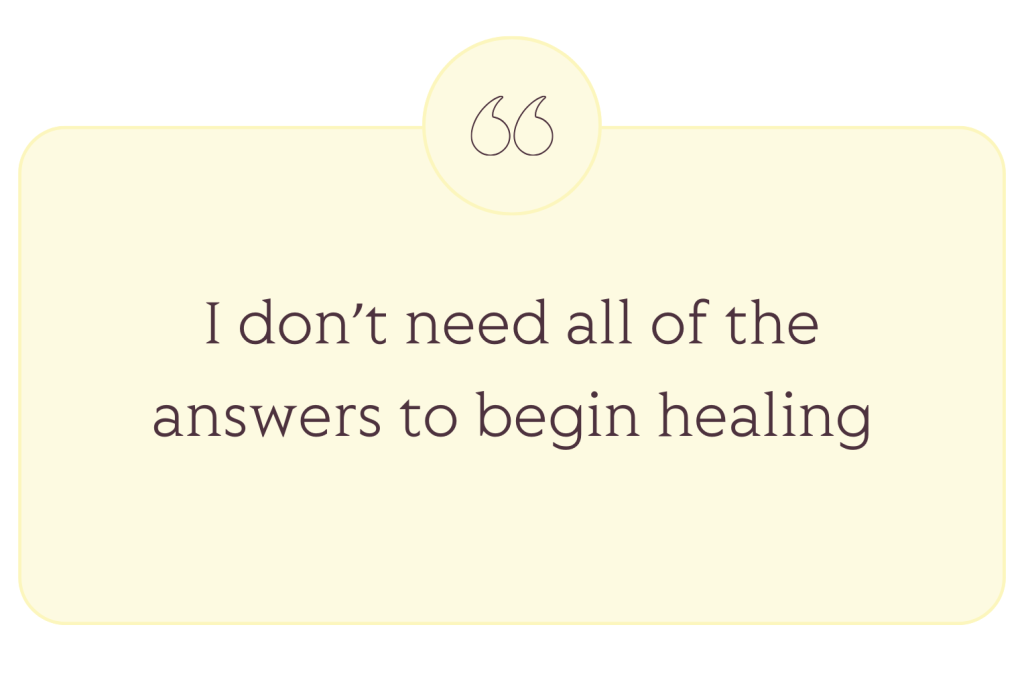
- Repeat: I don’t need all the answers to begin healing
- Write a list of what you did right in the relationship, not just what you wish you’d done differently
Deep Sadness After a Breakup: When the Grief Feels Heavy
This stage can feel quiet, heavy, and exhausting.
You may feel empty, disconnected, or emotionally numb. Motivation can disappear. Even simple tasks may feel overwhelming. This doesn’t mean you are going backwards. It means the reality of the loss is settling in.
Many people experience this sadness weeks or even months after a breakup, especially if they stayed strong at first.
How to care for yourself during deep sadness:
- Lower your expectations. Healing is happening even on slow days
- Focus on basic needs like rest, nourishment, and gentle movement
- Reach out for support, whether from a trusted person or a professional
If sadness feels unmanageable or begins to affect your safety, seeking help is a sign of strength, not weakness.
Acceptance After a Breakup: What Healing Really Looks Like
Acceptance does not mean you no longer miss them. It means you are no longer fighting reality.
You may still feel tender, but you begin to feel more grounded. You might notice moments of calm, brief sparks of joy, or a growing sense of self-trust. Decisions start to centre around your needs rather than the past.
Acceptance is not an ending. It is the beginning of choosing yourself again.
Ways to nurture acceptance:
- Reconnect with your body, friendships, creativity, and values
- Try something new, even if it feels uncomfortable at first
- Celebrate small moments of lightness as signs of healing
Grief Is Proof That You Loved Deeply
Grieving a relationship is not about getting over someone. It is about moving through what mattered.
Your pain is not something to rush or justify. It is evidence that you allowed yourself to love, to hope, and to be vulnerable. That is not something to regret.
With time, care, and support, grief softens. It reshapes you. And eventually, it makes room for a new chapter that is built on what you have learned and who you are becoming.
The Breakup Bible is here to walk beside you through that process, page by page, moment by moment.
Frequently Asked Questions
There is no single timeline for healing. Some people feel lighter in a few months, others take longer. What matters most is giving yourself permission to move at your own pace without pressure.
There is no set timeline. Some people feel relief quickly, while others experience waves of grief months later. Healing unfolds at your own pace, and there is no deadline.
A Whisper of Wisdom
Grief is not a straight line. Some days you will feel lighter. Other days, heavier. Healing begins quietly and grows into something steady over time.
Pause for a moment. What page do you feel you are on today?
Wherever you are, you are not alone. The Breakup Bible is a page you can always turn to when you need support, reassurance, and a reminder of your strength.
COMING SOON - The Breakup Bible App Launching in 2026