

How Friends and Family Can Help You Through Heartbreak: What to Say, What to Do, and What to Avoid
Chapter Summary
If you are reading this, chances are you are trying to support someone you care about, or you are heartbroken yourself and looking for the right words to explain what you need. Heartbreak can make everyday communication surprisingly difficult. One moment you might want company, the next you might need space, and often it is hard to explain why. This chapter is a shareable guide for friends and family helping you through heartbreak, offering a clear, honest look at what heartbreak can feel like from the inside, and what kind of support actually helps. Think of it as a steady reference point for this chapter, so there is less guessing and more understanding.
What Does Heartbreak Actually Feel Like Day to Day?
Heartbreak often feels like grief in the body, not just sadness in the mind.
Some days you might feel flat but functional, going through the motions without much feeling. Other days you might feel overwhelmed, teary, distracted, or exhausted for no obvious reason. This is not overreacting, and it is not a sign of weakness. It is your nervous system adjusting after a meaningful emotional loss. Insights shared by the American Psychological Association explain that emotional loss can affect sleep, concentration, energy levels, and emotional regulation.
If you are supporting someone through heartbreak, one of the most helpful things to remember is this: they can look fine on the outside and still be struggling internally.
What Can Friends and Family Do to Help During Heartbreak?
The most helpful support during heartbreak is consistent, emotionally validating, and low-pressure.
Support does not need to be intense or perfectly worded. What matters most is steadiness and emotional safety.
Listen First, Then Ask If Advice Is Wanted
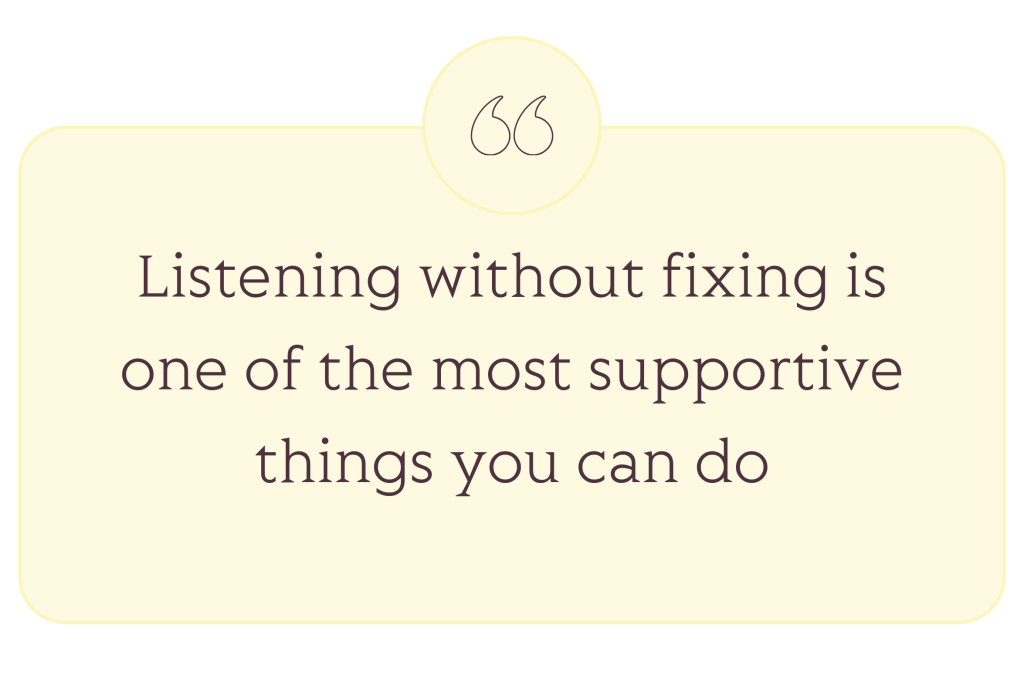
Listening without fixing is one of the most supportive things you can do.
If someone is venting, a simple question can help guide you: “Do you want comfort or solutions right now?” If the answer is comfort, staying present and letting them talk without redirecting them into advice can be incredibly grounding.

Check In Steadily, Not Intensely
Consistent check-ins over time are more helpful than a burst of attention followed by silence.
A short message every few days can mean more than you realise. Messages like “Thinking of you, no pressure to reply” or “Would a walk, a chat, or a quiet hang feel okay?” help maintain connection without adding pressure. This kind of predictability helps the nervous system feel safe again, which supports healing.
Offer One Practical Thing Instead of an Open-Ended Offer
Open-ended offers like “Let me know if you need anything” can be hard to act on when someone is overwhelmed.
Instead, offering one clear option can be more helpful. For example, “I am heading to the shops, can I drop something off?” or “Can I bring dinner Tuesday or Thursday?” Practical support paired with emotional presence often makes a meaningful difference during heartbreak.
Allow Low-Energy Days Without Taking Them Personally
Low energy is a normal part of heartbreak.
If someone cancels plans, goes quiet, or seems withdrawn, it is usually not personal. It is recovery. You do not need to cheer them up or push them forward. Staying calm, kind, and steady often helps more than trying to change how they feel.
What Should You Say to Someone Who Is Heartbroken?
The most helpful things to say are simple, validating, and non-urgent.
Phrases that tend to help include:
- “That makes sense.”
- “I am here.”
- “You do not have to be okay for me to stay.”
- “Do you want comfort, distraction, or company?”
If you are unsure what to say, honesty works well. Saying “I do not have the perfect words, but I care about you” often lands better than trying to say the right thing.
What Should You Avoid Saying, Even With Good Intentions?
Minimising or rushing heartbreak can make the experience feel lonelier.
Try to avoid phrases like “At least it ended now,” “You will be fine soon,” or “Everything happens for a reason.” These can unintentionally place pressure on someone to recover quickly. What helps more is communicating that you can handle their feelings without needing them to change.
How Can You Offer Support Without Overwhelming Someone?
Support works best when it is predictable and bounded.
A helpful approach is to ask what they need today rather than focusing on long-term outcomes. Offering one or two options and accepting the answer without debate helps the person feel respected and safe.
Examples include:
- “Do you want a quick call or a voice note?”
- “Do you want company or a quiet night?”
- “Would it help if I came over, or should I check in tomorrow?”
If healing had a dress code, it would likely involve soft pants and realistic expectations.
Frequently Asked Questions
Support matters because heartbreak affects the nervous system, not just emotions. Consistent, validating support can reduce isolation and help someone process loss more safely. Small, steady actions often matter more than big conversations or advice.
The best check-ins are brief, consistent, and flexible. Messages that offer options without pressure help maintain connection while respecting emotional capacity. Over time, this steadiness can feel deeply reassuring.
You can keep it simple. Saying “I care about you and I am here” is often enough. Listening without trying to fix the situation is one of the most supportive responses during heartbreak.
There is no set timeline. Some people need more support in the early weeks, while others need steady support months later. Emotional needs can change as healing progresses.
A Whisper of Wisdom
Pause and notice where you are in this story.
If this were a chapter in your life’s book, what page would you be on right now? The raw beginning, the uncertain middle, or the place where things start to soften quietly.
If you are supporting someone through heartbreak, thank you for staying present on the page they are on. If you are heartbroken yourself, thank you for making it through another day of it.
Butterflies never rush their transformation. You do not need to hurry either. The next page is already waiting for you, steady, luminous, and your own.
COMING SOON - The Breakup Bible App Launching in 2026
Subscribe for early access.